
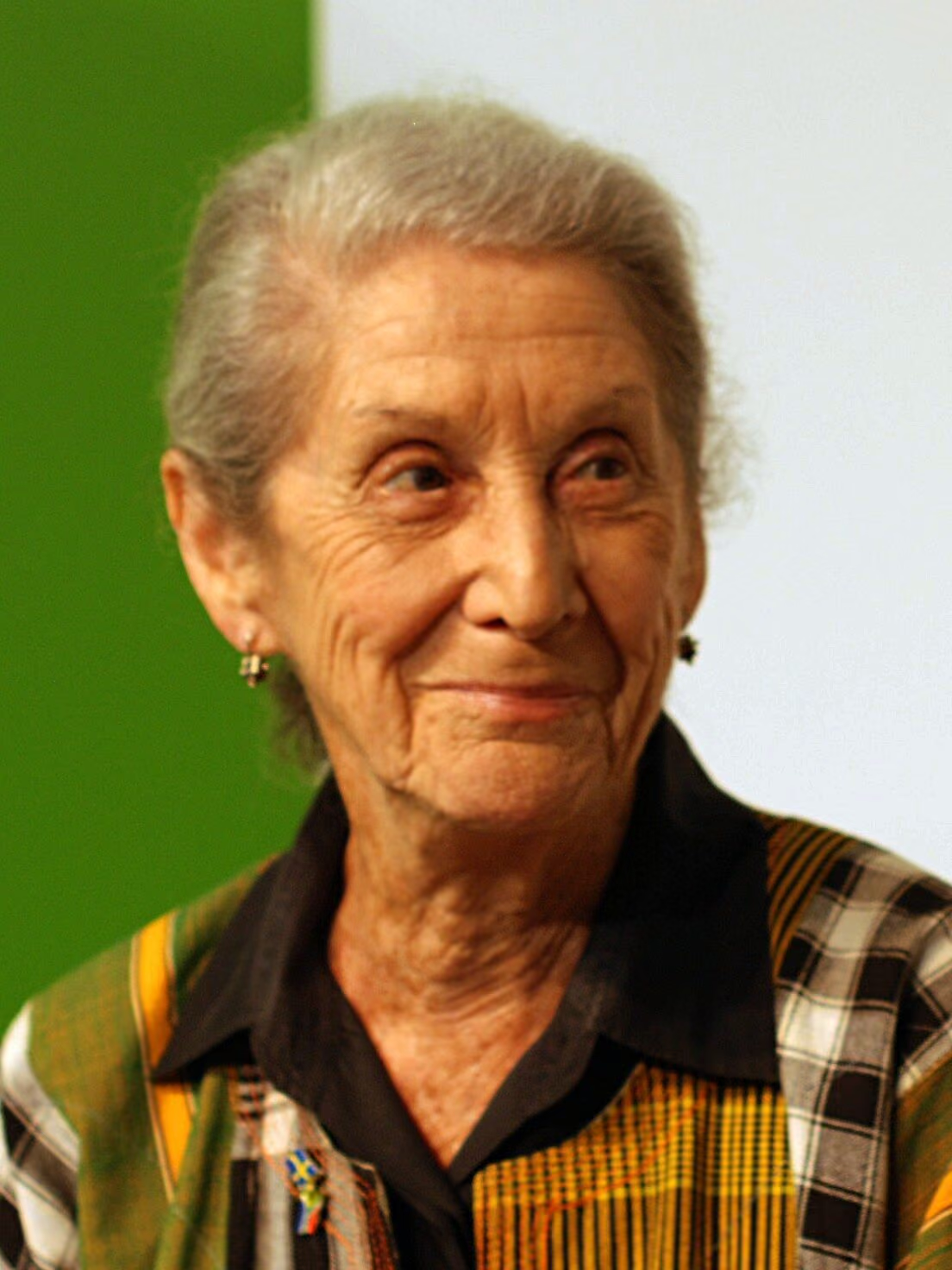

Novels & short stories
Nadine Gordimer
South African novelist and 1991 Nobel laureate who wrote against apartheid and saw several of her books banned.
Biography
As a teenager, Nadine Gordimer watched police raid the servant’s room in her parents’ house in Springs, a mining town outside Johannesburg. She published her first stories at 13, and in 1951 The New Yorker took one of her stories, the start of a long relationship with the magazine.
In 1960 the Sharpeville massacre and the arrest of her best friend, Bettie du Toit, pulled her into the anti-apartheid movement. She joined the African National Congress while it was banned and helped Nelson Mandela edit his “I Am Prepared to Die” speech, given from the dock at the trial that sent him to prison for life.
The government banned several of her books. Burger’s Daughter (1979) follows Rosa, the daughter of two Communist anti-apartheid activists. Written after the 1976 Soweto uprising, it was banned a month after publication and cleared three months later. Gordimer called it a “coded homage” to Bram Fischer, the lawyer who defended Mandela. The Conservationist had already won the Booker Prize in 1974, and the Nobel Prize in Literature followed in 1991.
Start with July’s People (1981). Gordimer imagines a revolution in South Africa: a white couple and their children hide in the village of July, their former servant, and every relationship between them shifts. Nadine Gordimer died in Johannesburg in 2014.
Read
- The Conservationist
- Burger's Daughter
- July's People