

Photography
Dorothea Lange
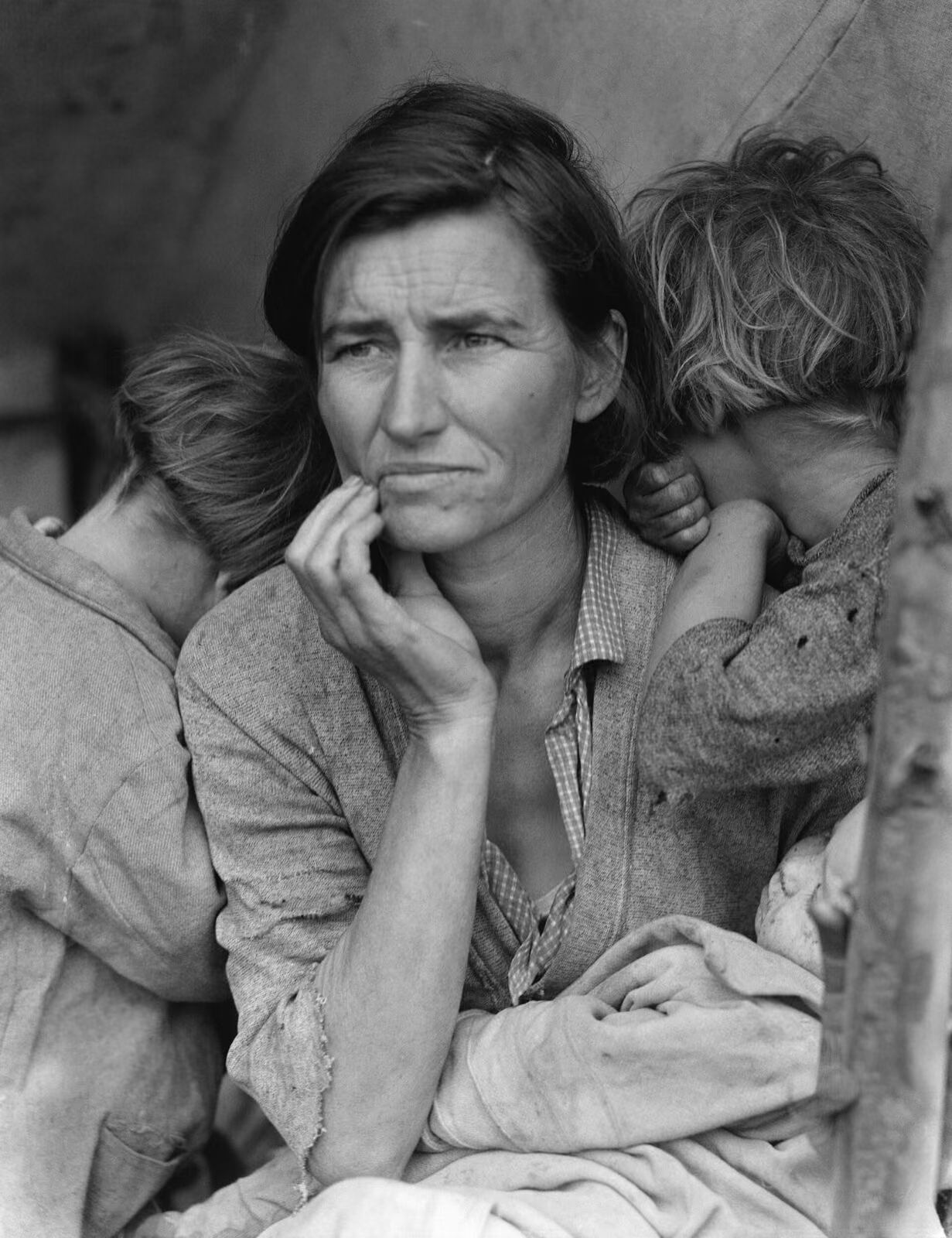
American documentary photographer of the Great Depression, who took Migrant Mother in a California pea-pickers' camp in 1936.
Biography
Dorothea Lange started out photographing San Francisco’s wealthy families in her portrait studio. When the Depression hit, she took her camera out into the street. Polio at the age of seven had left her with a limp for life, and she said it formed her.
Her first widely noticed picture, White Angel Breadline (1933), shows a lone man turned away from the crowd outside a soup kitchen. Government work followed with the Resettlement Administration, later the Farm Security Administration, photographing ruined farmers, sharecroppers and migrant families heading for California. She talked to people as she worked and wrote down what they said for her captions.
In 1936, driving home after weeks on the road, she passed a camp of pea pickers at Nipomo, then turned the car around. Inside a lean-to tent sat Florence Owens Thompson, 32, with her children. Lange made five exposures, moving closer each time. When the photographs ran in a San Francisco paper, the government rushed food to the camp. Migrant Mother went on to become one of the most reproduced photographs in the world.
After Pearl Harbor she was hired to record the forced removal of Japanese Americans to camps such as Manzanar. The authorities impounded most of those pictures, and they were not seen in public during the war. She died in 1965. Start with Migrant Mother, then find the other frames from that same visit and see how she worked her way to the final image.
Go and see
- White Angel Breadline
- Migrant Mother
- An American Exodus