
Music
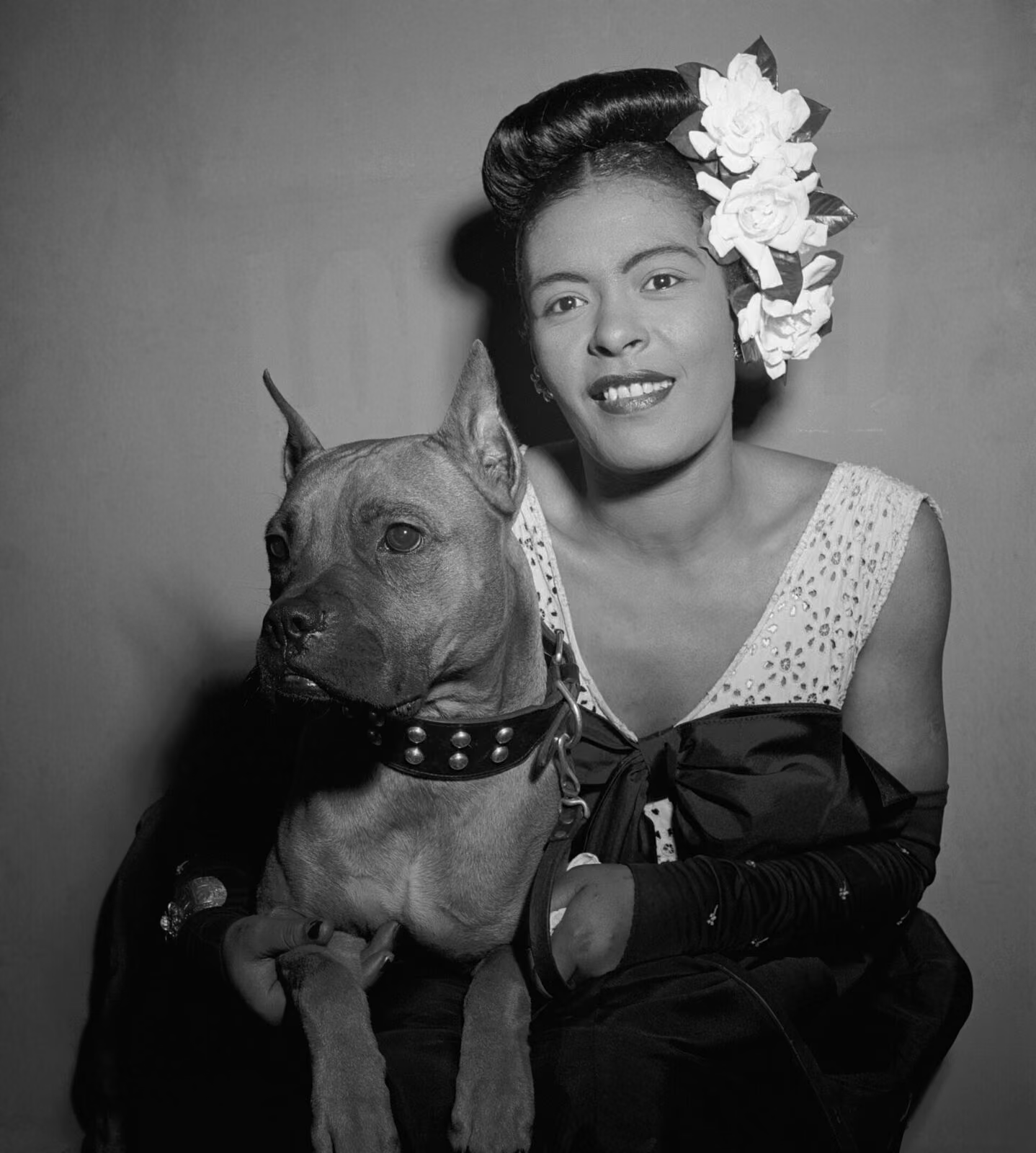
Billie Holiday
& Ella Fitzgerald
Two jazz voices who started out in 1930s Harlem: Billie Holiday, who sang Strange Fruit, and Ella Fitzgerald, the great scat singer.
Biography
Billie Holiday (1915-1959) and Ella Fitzgerald (1917-1996) both got their start in Harlem in the early 1930s. They share a page because their careers crossed early, and because they sang jazz in very different ways.
On 16 January 1938, at the Savoy Ballroom, Count Basie’s band with Holiday took on Chick Webb’s band with Fitzgerald. Metronome magazine gave it to Webb and Fitzgerald, DownBeat to Basie and Holiday. The audience voted for Ella three to one. The two singers later became friends.
Holiday, nicknamed Lady Day by saxophonist Lester Young, bent phrasing and tempo the way a horn player would. In 1939, at Café Society in Greenwich Village, she sang Strange Fruit, Abel Meeropol’s poem about lynching. Waiters hushed the room, a single spotlight lit her face, and on the last note the lights went out. Columbia would not record it, so the small Commodore label did.
Fitzgerald had won an amateur night at the Apollo at 17. Her A-Tisket, A-Tasket, a nursery rhyme she co-wrote, was one of the biggest-selling records of the decade. With bebop she began to sing like the horns, which is scat. In Berlin in 1960 she forgot the words to Mack the Knife and improvised the rest. That recording won a Grammy.
Play them back to back: Strange Fruit, then Mack the Knife from Ella in Berlin.
Listen
- Strange Fruit
- Lady Sings the Blues
- A-Tisket, A-Tasket
- Ella in Berlin