
Sculpture
Barbara Hepworth
English sculptor from Yorkshire, a leading figure of abstract sculpture, known for carved forms pierced right through.
Biography
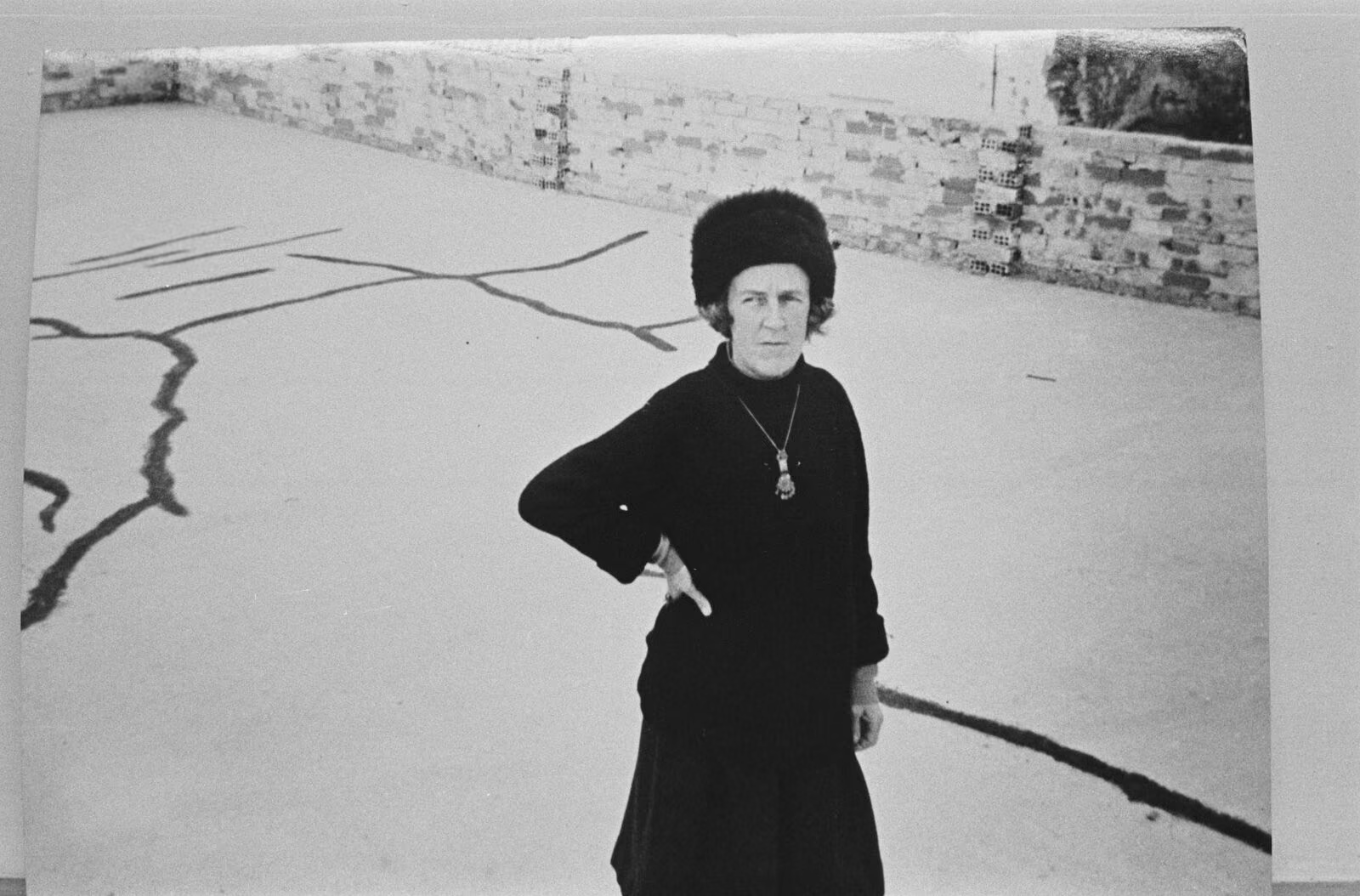
Barbara Hepworth was born in Wakefield, Yorkshire, in 1903. At Leeds School of Art she met another Yorkshire student, Henry Moore, and the two kept up a friendly rivalry for years.
A travel scholarship took her to Italy in 1924, where she learned to carve marble. In the early 1930s she made her first pierced sculptures, cutting a hole right through the block so that empty space became part of the piece. She came back to that idea for the rest of her life. In 1933 she and the painter Ben Nicholson visited the studios of Jean Arp, Picasso and Brâncuși in France, and she joined the Paris-based group Abstraction-Création. The next year she gave birth to triplets. A woman artist is not held back by cooking or children, she argued, “provided one always does some work each day; even a single half hour.”
When war broke out in 1939 the family moved to St Ives in Cornwall, and she stayed there until her death. The Cornish coast fed into her hollow forms, some painted inside or strung with cord. After her eldest son Paul was killed in 1953, a trip to Greece led to a group of carvings in guarea wood, such as Curved Form (Delphi) (1955).
She died in a fire at her studio in 1975. Her home and garden in St Ives are now a museum run by Tate. To see her at full scale, look up Single Form (1964), a large bronze outside the United Nations in New York, made in memory of her friend Dag Hammarskjöld.
Go and see
- Curved Form (Delphi)
- Single Form
- Two Forms (Divided Circle)